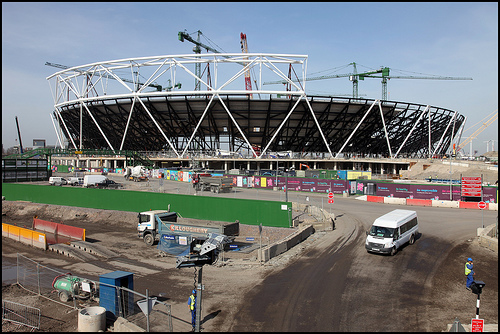
Alas, the "great mental and physical strain" of repeated "high intensity field inspections" has finally done for the world's sexiest dictator.
Monday, December 19, 2011
Vale Kim
Alas, the "great mental and physical strain" of repeated "high intensity field inspections" has finally done for the world's sexiest dictator.
Sunday, December 04, 2011
Australia vs Wales
Techniques of the foot: barefoot running as an alternative aesthetic regime
When I wake and head out the door for a run I pull on my shoes almost without thinking. As extensions of my body proper, snug to my feet and laced tightly, my running shoes recede from conscious attention in what Drew Leder identifies as a process of ‘focal disappearance’. Accepted through habit as augmentations of my body, I feel the world from my shoes, the ground beneath sensed as it unfolds before my advance.
While frequently forgotten in the action of running, the shoe also has a marked tendency to ‘dys-appear’, suddenly presencing itself as a source of pain and distress. As shoe and foot move independently of one another – exacerbated by faulty design, poor choice, or lack of fit – repetitive impacts and adhesions can dangerously re-shape and re-work the foot, deforming it, fracturing it, eroding it. ‘Why does my foot hurt?’ asks the author Christopher McDougall at the opening of his influential book Born To Run (2010). Perhaps the culprit, he surmises, is not the foot, nor the basic action of running, but the running shoe itself. The running shoe is, after all, a relatively recent development, particularly the so-called ‘technical’ shoe with its combination of padding, hi-tech materials, and ability to control and correct movement.
In this article I will explore recent debates and controversies relating to the design of running shoes and the emergence of ‘barefoot’ running celebrated by McDougall. But, rather than conduct this within the existing frames of sports injury, biomechanics or evolutionary anthropology, I will approach these debates in terms of aesthetics. If, as John Dewey has suggested, connection with the environment is the foundation of aesthetic experience, then an investigation of the mediating function of shoes between the body and the physical world is, at root, an aesthetic one. ‘Barefoot’ running can therefore be considered as involving an alternative aesthetic experience to that of shod running, one which is centred on a more pronounced tactile and sensory engagement between the foot and the ground, along with a foregrounding of the autotelic aspects of running itself.
This article will draw on the phenomenology of the body developed in the work of Drew Leder to examine the differences in sensory perception between shod and barefoot running, set against Alison Gill’s analysis of the rhetoric of running shoes and John Bale’s examination of ‘running cultures’. My aim is to argue that the divisions and debates over running shoe design and barefoot running are more fundamental than marketing, fitness and biomechanics, but involve the intersection of radically different aesthetic regimes founded in differing conceptions of the engagement of the human organism with its environment. The practice of ‘barefooting’ is revealed as a means by which its practitioners seek an experience of the world that is more grounded, vital, dexterous, and perceptive.
Friday, July 22, 2011
Saturday, June 26, 2010
Walking Gateholm
Gateholm is a tidal island or 'half tide islet', accessible only at low tide. We were there at just the right time for a visit, with the tide going out, and so we scrambled down to the exposed rocks and then up via a large inclined slab of rock on the eastern side. Across the level summit of the island is a thick cover of grass and a trail of sorts, visible from the mainland, which leads to a cairn at the far end. But my main experience of this small island was its emptiness, its sheer lack of observable features, and the exposure it affords to the weather. On this day the sun was out, but there was also a strong northerly wind. Underfoot the grass was thick (no rabbits!) and the weave of vegetation had a number of hidden hollows and holes, making walking an unsteady experience.
The Ordinance Survey map for the area indicates a 'settlement' on the island in the gothic script used to denote the presence of historic features. But, walking across the island we just couldn't see it. The island is deserted, empty, unless you look much more closely for physical traces or, conversely, from much further away. In aerial photographs the evidence of buildings is clear, and the suggestion is that there was a settlement here in the late-Roman/early medieval period with the isolation of the island and its steep sides providing the inhabitants with a naturally defensive position.
I like to think of myself as observant, taking Henry James' exhortation - 'Try to be one of the people on whom nothing is lost' - as a personal motto. But sometimes I just can't see what's there, it simply isn't sensible, because I haven't developed the competence to see it.
Tuesday, April 06, 2010
Saturday, April 03, 2010
Performance, architecture, construction
A famous modern architect designs a building, the like of which the world has never seen before. He is celebrated for his creativity. Yet his design will get no further than the drawing board or portfolio until the builders step in to implement it. Building is not straightforward. It takes time, during which the world will not stop still: when the work is complete the building will stand in an environment that could not have been envisioned when it started. It takes materials, which have properties of their own and are not predisposed to fall into the shapes and configurations required of them, let alone stay in them indefinitely. And it takes people, who have to make the most of their own skill and experience in order to cajole the materials into doing what the architect wants. In order to accommodate the inflexible design to the realities of a fickle and inconstant world, builders have to improvise all the way. There is a kink, as Stewart Brand writes, between the world and the architect's idea of it: 'the idea is crystalline, the fact fluid' (Brand 1994: 2). Builders inhabit that kink.I've often heard it said that the backstage areas of theatres are like building sites, in that the sort of labour that goes on in both involves similar skills and practices, similar working conditions and dangers. Both sites of labour necessitate precise timing and scheduling, the meeting of deadlines and the skillful handling and processing of materials. Would it be productive to think further about the intersections between theatres and building sites or, more specifically, between the act of performance and the act of construction? It strikes me that approaching construction from the perspective of performance might shed light on why construction and building are so little considered or discussed in wider culture. Building sites are often treated as eyesores, simply necessary pains, rather than sites of becoming that are a central means through which we organize, arrange, mark and distribute the world in which we live. Perhaps the 'ontological queasiness' that Jonas Barish has identified as a part of what he dubs the 'anti-theatrical prejudice' might also influence our dominant views of construction and building.
Friday, April 02, 2010
Anne Bogart on attention
What we pay attention to creates our experience of the world and this experience, in turn, determines who we become. You see what you look for. We are always surrounded by a myriad of stimuli and information. Any given moment presents a great deal to chose from, multiple aspects of the world vying for our attention. Using the tool of our attention, we hone in on what is useful in the present moment. We have to because we cannot take everything in. Without limiting our attention, we would be afflicted by an overwhelming information overload. This is why each person experiences the same situation in vastly different ways; we each pay attention to different aspects of the world around us. Our attention can be habitual or scattered but it is possible to guide attention consciously via the brain’s executive function: the frontal cortex. Without consciously guiding attention, we are victim to our habitual perceptions of the world. Via habit, for example, we may zone in on the defeatist negative attractions around us, our sense of failure and ineptitude that multiplies and then becomes our reality. But, on the other hand, we can train ourselves to attend to the beautiful things waiting to be noticed. We can become curious and push the perceptions outward towards the surrounding world and society. We can see the miracle of life around us. We can be altered and saved by the situation in which we find ourselves.In classes I find I'm constantly asking students to practice noticing and attending to aspects of their experience, and to attempt to describe or account for what they notice in as much detail as possible. What is it? What did you see? How was it done? This is based, in large part, on Al Wunder's 'Philosophy of Positive Feedback,' and it is, as Bogart explains, an attempt to train students (and myself) to be attentive, to notice, and to thereby seek out and focus on that which is most interesting, most intriguing, most beautiful.
It's also an important ethic when seeking to be sensitive to the impact and consequences of one's actions in the world. Drew Leder, writing in The Absent Body, explains how, in perceiving the world around us, our sensing bodies disappear, being ecstatic in nature and therefore absent, away from us. He finishes his chapter 'The Ecstatic Body' with a wonderful paragraph:
As I go through the day, my extended body ebbs and flows, now absorbing things, now casting them back onto shore. I do not notice my body, but neither do I, for the most part, notice the bed on which I sleep, the clothes I wear, the chair on which I sit down to breakfast, the car I drive to work. I live in bodies beyond bodies, clothes, furniture, room, house, city, recapitulating in ever expanding circles aspects of my corporeality. As such, it is not simply my surface organs that disappear but entire regions of the world with which I dwell in intimacy. (35)The art I value most is that which reminds me of those regions of the world with which I dwell in intimacy and yet never seem to notice.
Thursday, April 01, 2010
Looking at actors
I'm re-working an article at present, in response to some reader's comments, and in doing so I've started reading Aoife Monks' The Actor in Costume (2009). This is rather timely given that I've just been to see Simon Annand's exhibition The Half, which Monks refers to in her opening chapter 'Dressing Rooms: The Actor's Body and Costume'. Discussing Stuart Pearson Wright's portrait of Michael Gambon and Edgar Degas' painting Actress in Her Dressing-Room (1879), Monks indicates the disappointment of such pictures which only seem to offer us an insight into actors and acting:
The problem that always undermines portraits of actors in their dressing rooms is that once actors are looked at - even if they appear not to notice - their activity turns into fictional labour, they still appear to be acting even if their averted gaze and their absorption in the task of dressing suggests otherwise. Dressing room portraits promise to reveal the mysteries of acting, but they end up perpetuating it further, making the private life of the actor all the more secretive and unknowable. The "real" actor is in the end a fantasy of portraits of dressing up. (33)Backstage space is always implicitly depicted from a spectator's point of view. The portraits that Monks refers to are made for those whose access to backstage spaces is tinged with the thrill of transgression and who seek the real behind the imaginary. But what happens if we assume that the backstage is the normative orientation towards performance and attempt to view it, and the other spaces of theatre, as those who work there do? It's my contention that in the backstage actors (in the company of technicians, stage managers, etc.) produce space that accommodates their onstage performances and counters the uncertainty and transience of their own employment and the wearing, alienating machinery of commodity theatre. This is a tactics of coping, a means of maintaining a sustainable artistic practice by producing recuperative spaces where their needs can be met. And it has nothing to do with how they are perceived by spectators, but how they perceive themselves.
Wednesday, March 31, 2010
Explaining theatre
What, after all, is there to say? We tell our friend that the theatre is a place where people come and go, obsessively it would seem, through the same exposed rooms and spaces (they have been coming and going across the same exposed space of the Royal Court in London for decades), and where they perform various harmless and inconsequential actions: a bit of wandering around, some waving of the arms, some standing up and sitting down, and playing it all up as they do so, often getting remarkably excited. It is a place too, we tell our friend, where every action that is performed appears planned out or scripted in advance, at least to an extent. This produces a strange effect, we say, in that the people who are coming and going across the space - let's call them the actors - seem to have all the freedom in the world to do whatever they like, even the freedom not to do anything at all. But at the same time they seem constrained, as if all their choices are somehow being made for them somewhere else, and as if every move they make is basically a renewed attempt to deal with this peculiar situation.
Joe Kelleher, Theatre & Politics, 61-2
Tuesday, March 30, 2010
Three installations/exhibitions
Miroslaw Balka
Balka's How It Is is a huge steel box, welded together and sitting on piles. In shape it reflects the architecture of the Turbine Hall itself, and in size it looms as a hulking presence; viewed from the walkway above the floor of the hall, it dwarfs the figures walking alongside it. Underneath there is just enough clearance for me to walk upright, and as I pass under it I can hear the footsteps of those inside. The entrance is from the far end of the hall, facing the end wall. Here the box presents itself as a large black cavity with a ramp leading up to the opening. Walking in I can make out figures ahead of me in the gloom by the light reflecting off their skin. The details of their faces are indistinguishable. The walls are covered in black felt, absorbing the light. To approach the walls is to experience a dizzying disorientation; just how far is the wall from my outstretched hand? The low level of light - I can feel my eyes working - and the muffled faces of those around me are akin to the experience of Societas Raffaello Sanzio's Purgatorio in the Silk Street Theatre this time last year. Then I faced a figure, half protruding from a wall, struggling to emerge. For one brief second the figure looked at me, making a kind of eye contact, even though his facial features remained veiled in the darkness. Turning around to look back towards the opening of the box, those coming into or leaving appear as silhouettes against the wall of the Turbine Hall beyond. And for all the emphasis on lack of light and the effect of this on sight I am aware of the echoed sounds of activities elsewhere in the hall, beyond what I can see. This reminds me of the Holocaust Tower in Daniel Libeskind's Jewish Museum in Berlin, where light and the sounds of city traffic enter through the slightest of chinks in the bare angular walls of a concrete silo. For more on Balka's How It Is, see the video here.
Simon Annand
At the V & A Museum later that afternoon I finally got to see Simon Annand's photographic exhibition The Half. The exhibition is comprised of actors photographed during 'the half', the thirty minutes leading up to the call for 'beginners' (made five minutes before a performance is due to commence). I bought Annand's book The Half last year when I first heard about the exhibition, but this is the first time I've been able to see the exhibition and experience the cumulative effect of the photographs placed side by side around the walls of a room. The exhibition was made more interesting because of an introductory video and the presence of more recent colour photographs not included in the book (which is made up of purely black and white shots). In the video Annand is shown photographing actors, and his voice is heard discussing his interest in the process. He states that he isn't interested in the backstage environment itself, or in the ephemera of theatre, but in the relationship of actors "with themselves". And in the course of the video he is shown doing something that I suspected from my viewing of the photographs: he instructs one young actor how to look at his colleague as they sit side by side in the dressing room.
By all accounts the exhibition has been immensely popular, and the room at the V & A was certainly well patronized while I was there. Interestingly, there was a search for recognition amongst the images, and people would point out to their friends the actors they recognised, stating their names and listing the roles or occasions in which they'd seen them. So much of this exhibition is actually about faces and faciality; there are full length and three-quarter shots and some certainly focus on physique, but it is the close-ups of actors' faces that is the key to the images and to the affect nature of the exhibition. The faces display, on the whole, a melancholy, pensiveness and weakness as if the beings displayed here are themselves facing an overwhelming force. The actors here are vulnerable, except when shown enjoying the comforts of sociality. With others present in the image there is laughter and a spatial solidarity. Sometimes this is even enjoyed with the unseen photographer.
In this exhibition actors are made to appear as strangely fragile beings, subjected to the unavoidable necessity of time and action. If, as Alice Rayner has argued, a glimpse into the backstage offers "a sense of privileged access to the secrets of the real thing", then this exhibition, I'd argue, does little to demystify the backstage, but the very attraction of the exhibition relies on maintaining the "seeming difference" of that space from the space of the viewer. The actors depicted seem like creatures not unlike ourselves, but they are presented as somehow more aware, more knowing, of the passing of time and of their own mortality. See images from The Half here.
Celeste Boursier-Mougenot
Finally, Celeste Boursier-Mougenot's installation at the Curve gallery in the Barbican Centre brought me real joy. There was a lengthy queue for the gallery. "It's free," the man behind the information desk mentioned apologetically when I asked about the queue. Joining the line, and listening in on the conversation of the couple next to me, an American woman walked up. "Is this the line for the birdies?" she asked. I presumed that she, like I, couldn't recall the artist's name, but just that this was an artwork featuring small birds and electric guitars.
Twenty-five people are allowed in at a time. Stepping through a curtain of chain metal links, a strobe light flashes. Inside is dark with wooden steps leading down. "No food or drink, no flash photography and stay on the wooden floorboards", the attendant had instructed me before I entered. The floorboards are untreated pine, of the type one might find marking a path through a nature reserve. It's a boardwalk really, running through the curved space. On either side are patches of sand with clumps of spinifex grass, so it really does seem to be a boardwalk through a darkened landscape of sand, except that large across the dark walls are projections of rapid fingers working the fret boards of guitars. The projections are in white outline, the guitars are Gibson Les Pauls. Occasionally the body of a guitar is visible. Small speakers line the path, sparsely placed, with the sound emitted being unusually high pitched, insect-like.
As I walk along, the curved space lightens, until I see the fully lit space at the end. Here the gallery broadens out and its here that my fellow spectators are gathered. Four small, open nesting boxes are high up on the wall; one has pieces of dried spinifex grass emerging from it. The wooden boardwalk covers nearly the whole space, except for patches of sand and spinifex. Depending on the size each of these has either a cymbal on a stand, an upturned guitar or bass, or a microphone stand without a microphone. The cymbals are attached upside down, with the concave surface filled with bird seed or water.
In and amongst this are the finches, apparently an equal number of males and females. Some cluster on an amplifier, while other pairs perch on guitars, preening each other. One female chases a male off a guitar; he lands at the other end only to be chased off again, then again. In doing this the female bounces down the strings, with the attached amplifier emitting heavy plosive bursts of sound. One of the other preening couples picks at the strings creating a light rhythm. Two guitars have dried spinifex strands woven in amongst their strings while a nest of sorts is under construction behind a fire extinguisher. A bass growls while the birds themselves emit slight peeps and cheeps. They fly close past my legs, from one perch to another, a whirr of wings. I stand, observing, and the sudden bursts of sound or the quick flight of birds from one spot to the next attract my attention and that of my fellow spectators, turning us around and around in the space. The gallery is a walk in aviary, part nature park, but also part band room. The instruments make audible the birds' presence and movements. It feels like I'm intruding on the birds' space as they feed, preen and build nests. But their actions are also mediated by the guitars. Perhaps what I experience here is a strange ecology of action and harmonics where the very sensitivity of these birds to my presence and that of others is made more apparent by the sensitivity of the instruments.
Friday, February 19, 2010
Soundscapes and Guitars
I remembered Whitehead's performance again this week when I watched the following video trailer on YouTube for Céleste Boursier-Mougenot's installation at The Curve in the Barbican Centre, London.
There's something brilliant about the interaction between the finch, the twig and the guitar and the sensitivity of the guitar to the slight twitches and fidgets of these almost weightless birds.
Another memorable piece of sound art involving electric guitars is Christian Marclay's Guitar Drag, a piece that evokes the harmonic and destructive exuberance of a rock concert with the threat and dread of an amateur video recording of a crime.
Wednesday, February 10, 2010
Haruki Murakami on Running
One runner told of a mantra his older brother, also a runner, had told him which he's pondered ever since he began running. Here it is: Pain is inevitable. Suffering is optional. Say you're running and you start to think, Man this hurts, I can't take it anymore. The hurt part is an unavoidable reality, but whether or not you can stand any more is up to the runner himself. This pretty much sums up the most important aspect of marathon running.Haruki Murakami, What I Talk About When I Talk About Running, vii
Tuesday, February 09, 2010
Flexibility in Theatre Architecture
Monday, February 08, 2010
Oskar Schlemmer on Play and Scepticism
This semester I'm teaching a module called Improvisation: Spontaneous Performance. This is the second time I've taught it and this year I've asked students to create weekly blog entries as a way of writing drafts for the Reflective Journal they need to submit at the end of the semester. The first entries are starting to roll in and there's the beginnings of some interesting material. Already I'm feeling like I want to put some of my own thoughts up, which I've started to do. Here's my second entry, written today (the actual blog the students write isn't publicly accessible):
I'm sitting in the National Library today reading The Theater of the Bauhaus by Walter Gropius. The final chapter, by Oskar Schlemmer has some interesting material that seems relevant to our investigations into improvisation. Schlemmer writes that from the early days of the Bauhaus the artists involved sensed that the impulse for creative theatre was "the play instinct" (der Spieltraub). (82) This, he explains is "the un-self-conscious and naive pleasure in shaping and producing, without asking questions about use or uselessness, sense or nonsense, good or bad." (82) That strikes me as a good description of what I hope we will be doing in many of the workshops in this module: 'shaping' and 'producing' without worrying about the usefulness or the sense of what we are doing, but taking pleasure in the playfulness. However, Schlemmer goes on to describe how this developed at the Bauhaus:
"We might say that during the course of its development, this state of naivete, which is the womb of the play instinct, is generally followed by a period of reflection, doubt and criticism, something that in turn can easily bring about the destruction of the original state, unless a second and, as it were, skeptical kind of naivete tempers this critical phase. Today we have become much more aware of ourselves. A sense for standards and constants has arisen out of the unconscious and the chaotic." (82)
I think Schlemmer's idea of a 'skeptical kind of naivete' is helpful here when thinking about how, in this module, we can maintain a sense of naive playfulness but also engage in reflection and criticism about that playfulness without destroying it. The hope then is, that a sense of constants (which in our case would be the development of techniques, habits and understandings) would emerge.
Just some ideas. If you have the time or inclination, let me know what you think.
Walter Gropius (ed) The Theater of the Bauhaus. Trans. Arthur S. Wensinger. London: Eyre Methuen, 1979.
Saturday, June 13, 2009
The Girls of Llanbadarn
I am bent with wrath,
a plague upon all the women of this parish!
for I've never had (cruel, oppressive longing)
a single one of them,
neither a virgin (a pleasant desire)
nor a little girl nor hag nor wife.
What hindrance, what wickedness,
what failing prevents them from wanting me?
What harm could it do to a fine–browed maiden
to have me in a dark, dense wood?
It would not be shameful for her
to see me in a bed of leaves.
There was never a time when I did not love —
never was any charm so persistent —
even more than men of Garwy's ilk,
one or two in a single day,
and yet I've come no closer to winning one of these
than if she'd been my foe.
There was never a Sunday in Llanbadarn church
(and others will condemn it)
that my face was not turned towards the splendid girl
and my nape towards the resplendent, holy Lord.
And after I'd been staring long
over my feathers across my fellow parishioners,
the sweet radiant girl would hiss
to her campanion, so wise, so fair:
'He has an adulterous look —
his eyes are adept at disguising his wickedness —
that pallid lad with the face of a coquette
and his sister's hair upon his head.'
'Is that what he has in mind?'
says the other girl by her side,
'While the world endures he'll get no response,
to hell with him, the imbecile!'
I was stunned by the bright girl's curse,
meagre payment for my stupefied love.
I might have to renounce
this way of life, terrifying dreams.
Indeed, I'd better become
a hermit, a calling fit for scoundrels.
Through constant staring (a sure lesson)
over my shoulder (a pitiful sight),
it has befallen me, who loves the power of verse,
to become wry–necked without a mate.
Text: www.dafyddapgwilym.net
Wednesday, April 22, 2009
I think there's something growing in there ...
Tuesday, April 21, 2009
Performance Theology
I've just read an article by Peter Civetta in the Spring 2008 edition of Performance Research entitled 'Body/Space/Worship: Performance Theology and Liturgical Expressions of Belief'. In it Civetta explores the relationship between performance and theology through two case studies: the first being the practice of Jum'ah Prayer in the Al-Nur Mosque in New York and the second looking at the impact of spatial layout on liturgical experience at Grace Episcopal Church in Chicago.
Discussing the first, Civetta observes that the possible meanings of the physical actions in salat (prayers) are rarely (if ever) speculated upon by Muslim believers; the actions are simply learnt and then reproduced. Civetta suggests that a result of this is that Muslims remain open to the experience of the actions: "Without recourse to definitive judgements as [to] what the movements represent, they must sit and experience them for what they are." (9) Reflecting further on this Civetta explains,
From this experience, I gain increased recognition of belief as not wholly thought, not a solely conscious and intellectualized process of discernment and acceptance (or rejection). Performance theology lives as a bodily function; how these people choose to live their lives is in part dictated by what they learn from their bodies (not their minds) in the act of prayer [...] Belief not only gets expressed by the body - an aftereffect of previously determined ideas - but comes from the body as well. (10-11)With the example of Grace Episcopal Church Civetta comments on the restrictive nature of the building's spatial layout. Built in an English Gothic Revival style between 1898 and 1905 the church is a large and imposing structure that attempts in some way to reproduce the grandeur of European cathedrals. According to Civetta, the physical dimensions of the church - the sheer distances between floor and ceiling and from end to end - suggest "an epic God and a distant God", circumscribing the notion of God as Abba (Daddy). After discussing the positions and features of the high altar, pulpit and baptismal font Civetta turns to briefly discuss the lived experience of the space, commenting that in the weekly life of the congregation the space itself mitigates against intimacy and communality and instead "puts the emphasis for worship on individuality and visuality." (16) He summarises:
In this way, spatiality at Grace Church possesses its own performance theology, and that performance theology has determined to a large extent the possible performance theology of the worshiping congregation. (17)It's an interesting article and does outline approaches for other performance scholars to take when exploring religious experience; the suggestion to avoid simply theatricalizing liturgy but to take into account its status as worship is a helpful one. At the same time I'm also uncomfortable with the way Civetta uses the term 'determined' in the sentence I've quoted above; can spatiality or architecture actually determine anything? In his analysis he places a great deal of importance on spatiality without, perhaps, taking into account wider sociocultural, historical and theological contexts that might also reinforce the influence of space on the lived experience of the congregation.
Finally, reading this article through my own particular 'binocular' view - as a Christian and a performance scholar - I also take it as a challenge to re-examine my own 'performance theology', considering how what I do necessarily impacts upon what I believe and how, in the knowledge of this, I might instead seek to enact a more 'faithful' performance.
Saturday, April 18, 2009
Meta-thinking
The most effective, most creative problem solvers engage in a process of meta-thinking, or "thing about the thinking." Meta-thinking means that you are aware of how you are thinking as you are doing the thinking. Meta-thinkers engage in continual dialogue of testing, stretching, criticizing, and redirecting their thought processes.